Tours and Activities:
Quiet, European- Streets
The natural vegetation that blankets the nearby hills and the carefully tended gardens surrounding the traditional wooden houses lend identity and character to this village with a history of its own.

Arriving in Frutillar from above, a wide bay opens up over Lake Llanquihue, with the town gently unfolding along its shoreline. Its sidewalks and buildings reflect local history, visible in carefully preserved structures, some of them more than 150 years old.
As we walked along the waterfront, the sight of Osorno and Calbuco volcanoes immediately captivated us. The beach, the tree-lined areas, and the orderly layout of Philippi Avenue frame this promenade, inviting visitors to stroll its entire length.
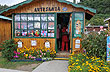
The value placed on the old German-style houses is admirable. Many of them remain private residences, while others have been adapted to operate as boutique hotels, tea houses, restaurants,handicraft shops, open year-round.
Many still retain their original wooden siding and roofs made of native alerce shingles, along with large windows offering privileged views of the lake. Two buildings especially representative of that era are the Richter House, now home to the School of Arts, and the Lutheran Church.

We paused at one of the traditional tea houses to enjoy its excellent pastries and to immerse ourselves in the serene atmosphere of the landscape. We tasted the classic kuchen, an emblem of German heritage, prepared according to recipes passed down through generations and offering a wide variety of flavors.
In front of the municipal building, a giant chessboard painted on the ground, with movable pieces, invites locals and visitors a to stop and play. Just a few steps away, Teatro del Lago stands as the city’s main cultural symbol: a modern architectural landmark that reaffirms Frutillar’s deep connection with music and the arts. Its halls host the renowned Musical Weeks, which each summer bring together performers and audiences from across Chile and abroad, while its striking silhouette along the waterfront and the musical details scattered throughout the promenade further reinforce this identity.
We continued our walk along Pérez Rosales Street, parallel to the waterfront and similar in character. We stopped to admire gardens and private homes that harmoniously combine Chilean and German influences. This street is also home to several dining establishments offering craft beers and regional dishes, with lamb and pork taking center stage.

We arrived at the Museo Colonial Aleman, German Colonial Museum, where, surrounded by a beautifully maintained park, we toured the main house, the mill, the blacksmith’s workshop, and other buildings that help visitors understand the way of life of the first German immigrants who settled in the area.
To explore Upper Frutillar (Frutillar Alto), one must ascend a noticeable change in elevation that leads to an area where viewpoints offer panoramic views of the bay and the lake—ideal for photography. There, we walked along wider streets where shops, schools, banks, residential buildings, and the bus terminal are concentrated, while the railway line remains as a tangible trace of colonization and its historical importance as a route of communication.
As night fell, the lights along the waterfront were reflected on the lake. The cool air and the calm atmosphere revealed a more intimate nightlife, centered mainly around restaurants and private homes, away from large crowds.
Frutillar is a city that preserves the spirit of a small town: closeness among its residents, warm hospitality, and a constant commitment to tourism development. A sense of tranquility, culture, and music fills the air, and with that feeling, we shaped our account of this charming locality.

 See also:
 © 2007-2026 Total or partial reproduction forbidden. Derechos de Autor 675243 Ley 11723