Tours and Activities:
Settler’s Home
Each space, each room, and every object on display bears witness to a bygone era, reflecting the effort and dedication of those who inhabited these lands in their daily lives.

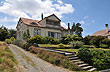
Located on a hillside with privileged views, the German Colonial Museum recreates the layout of a classic mid-19th-century rural estate, dating back to the period when German immigrants settled in Frutillar and the surrounding region.
Both the gardens and the five buildings, clad in wooden shingles, face the lake and form an open-air museum, inviting visitors to stroll among centuries-old trees and flower-filled beds. The first building, located near the entrance, is the Llavería, which currently houses the museum’s administrative offices and management.
Further along stands an old mill, which once operated along the lakeshore. Water powered a paddle wheel through a wooden channel, activating the machinery that ground grain into flour using large stone wheels. Thanks to this system, the settlers obtained flour, an essential resource for their sustenance.

Continuing along the path, visitors reach the Blacksmith’s House, which can be entered to closely observe the machinery and tools essential to the agricultural work of the time. Here, the workshop and the living quarters of the blacksmith and his family are combined. The forge, anvil, swage block, chisels, and hoops remain as testimony to the arduous daily labor carried out there.
The circular agricultural barn, known as El Campanario, was used to store bundles of wheat. Due to the region’s frequent heavy rainfall, threshing was carried out indoors. This space also displays agricultural machinery and domestic utensils typical of the period.
At the highest point of the property stands the Main House, built in 1889, which reveals how German farming families lived during a time of economic prosperity. It features a succession of spacious salons, a music room, a winter garden, and numerous bedrooms and bathrooms. The large kitchen holds a special place in daily household life and displays original utensils and objects. The furniture, of European origin, was brought by the settlers from their homelands.

The museum complex as a whole pays tribute to the German immigrants who arrived in the region in the mid-19th century and who, through perseverance and hard work, transformed wet lands into a thriving settlement. At the time, the Austral University of Chile designed the group of buildings, and with the support of the German government and the local municipality, a rural settlement was recreated with features similar to the originals.
Visiting the museum offers insight into the origins of Frutillar and an understanding of a way of life very different from today’s, one shaped by technological progress yet deeply rooted in the city’s identity and cultural development.

Contact
Municip. de Frutillar - Comunic. y Turismo

 See also:
 © 2007-2026 Total or partial reproduction forbidden. Derechos de Autor 675243 Ley 11723