Tours and Activities:
Flying above Chiloé
Mónica Pons Mario PtasikVarious local air clubs offer first flights in charge of expert pilots that ensure a magical outing.

Chiloé Island, surrounded by the Pacific Ocean and observed from the air, increases its charms and creates an integrated vision of sea and land. The movements of the tides, the woods and the rocky formations are observed from a plane that flies overhead.
Our flight departed from the air club in Castro. Santiago, our expert pilot, headed north towards Puerto Varas, in the continent. We passed over Puerto Montt and were fascinated by the views of the Calbuco, Puntiagudo and Osorno Volcanoes, as well as by enormous Lake Llanquihue.

The plane changed direction towards the south again and we faced a different scene: the vast sea. Santiago told us about the salmon farms, the giant ships and the pellet factories where salmon food was made. That world was unknown to us and we found it extremely interesting.
Chiloé appeared before us with its wild coasts, its green natural reserves and its entire archipelago. The Cities of Ancud, Dalcahue and Castro stood out. The villages located on the coast devote their life to fishing, increasing the sea product industry with the aid of their small boats.
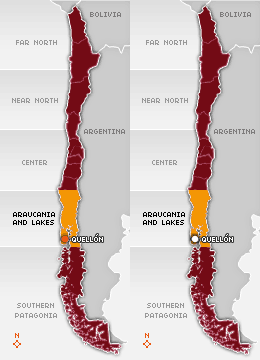
But the flight was not over yet. Santiago headed towards Quellón, the southernmost village on the island. Our pilot talked to us about the history of aviation on this island. In a not too distant past, there were no roads on Chiloé and the only means of communication with the continent was the sea. Health emergencies and forest fires forced the local dwellers to use small civilian planes supported by the central government. That is how air clubs were founded and professional pilots were trained. Today, their expertise is not questioned at all.

As we were flying over Chiloé National Park, the plane made an unusual movement that made us grab our seat. Santiago tried to calm us down by explaining to us how changes in altitude work due to different temperatures and prevailing winds. We kept on admiring that green lung and, farther ahead, several lakes and the southern shore of the island.
Quellón was the last important settlement we saw from the plane. The river market and the waterfront ornamented with stalls and colorful boats caught our eye. We succeeded in imagining their daily life. Afterwards, as if we had turned the map upside down, we headed back to Castro.
Before landing, we observed its palafitos (stilt houses), the main square with its imposing church and everything looked even prettier than before our departure. As we touched down, we noticed only two hours had passed. We thanked Santiago for his company and everything we had learned from him and bade farewell.

Contact
Club Aéreo de Castro

 See also:
 © 2007-2026 Total or partial reproduction forbidden. Derechos de Autor 675243 Ley 11723