Tours and Activities:
Undulated Puerto Octay
Its streets reveal the history of carefully preserved century-old architecture, reflecting the German legacy that accompanies the daily lives of its inhabitants.

Puerto Octay may not have the same tourist appeal as other towns along the coast of Lake Llanquihue. However, in recent years, it has gained visibility for its natural landscape, protected history, and a range of nautical and outdoor activities. In addition, since the National Monuments Council declared Puerto Octay a Typical Zone, various community training programs have been promoted to reinforce the conservation of local heritage, demonstrating a growing interest in cultural tourism in the area.
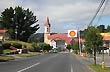
We traveled from Frutillar to visit it, and as we entered the steep slope leading to the center of Octay, we had a close-up view of its splendid parish church with its red roof and dome. Further on, we were greeted by its main square, which is the hub of commercial and public activity in the municipality. In the center, a covered Odeon is located, where various musical performances are held.
We were struck by the large number of well-maintained old houses, many of which had plaques indicating the surname of their first occupant and their history. These were stories of lives that moved us and that we later shared with some of the town's inhabitants.

The predominant architecture, built between the late 19th and early 20th centuries using native woods such as oak and laurel, reflects the styles of the regions from which the German settlers originated. Today, these houses are used as residencescommercial premises. Among them, the Hotel Haase stands out, declared an architectural monument and still in operation, as well as the Wulf and Niklitschek houses, which are part of the official heritage inventory.
Visiting the El Colono Museum revealed the depth of local tradition. The collection of objects, tools, machines, and photographs illustrates the agricultural work, trades, and navigation advances made by the first settlers. The household and farm utensils show the limited resources of the immigrants, but also how much they accomplished with what they had.

We then arrived at the San Agustín church, whose tower we had seen in the distance. Very sparsely decorated and dignified in its simplicity, it was built in 1908 entirely of wood. Its floor-to-ceiling interior columns, pointed arch windows, and various religious carvings are part of its historical value.
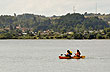
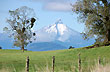
We left the downtown area to explore the shores of Lake Llanquihue, which can be accessed by various descents. The lake is immense, and water sports, including sport fishing, can be enjoyed at every turn. The Osorno volcano accompanies the route, and once on the fine sandy beaches of Maitén and La Baja, the landscape opens up towards the Centinela peninsula, where several summer residences are located.

Puerto Octay continues to strengthen its tourist offering thanks to its landscapes, spas, and protected heritage. The extensive forests and traditional architecture remain an essential part of the charm of this place, a town that honors its history while advancing in the conservation of its natural and cultural resources.
Contact
Municipio de Puerto Octay - Dep.Turismo
Tel: +56 64-2391860

 See also:
 © 2007-2026 Total or partial reproduction forbidden. Derechos de Autor 675243 Ley 11723