Tours and Activities:
Valdivia, Urban and Navigable
Exploring the many attractions of one of the most historic cities in the country takes more than a day: every corner holds stories and experiences worth discovering.

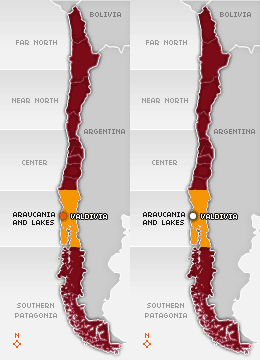
The coquettish city of Valdivia is nestled in the River Region, where the navigation network is part of the urban scene. Walking around its urban shell, crossing its emblematic bridges, and its easy access to the sea are the greatest pleasures it has to offer.
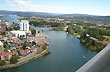
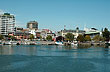
We hired a city tour at an agency. We were picked up at the hotel by a guide and a shuttle. Our first destination was Arturo Prat Avenue, also known as the riverfront drive. This is the main pedestrian promenade in the city. It runs alongside the Calle Calle River, where we were impressed by the River Market, the tour motorboats, and the shipyards.

We went around its typical market, where fresh fish and seafood, as well as fruit and vegetables brought from the islands, are offered for sale. We also encountered sea lions, pelicans, and seagulls that caught our attention, as they coexist with the vendors. On the other side of the river, we could see the buildings housing the Historical and Contemporary Art Museums. We walked up to the point where we caught sight of the Cau Cau River, which surrounds Teja Island.
Back on the bus, we moved along General Lagos Avenue towards the oldest neighborhood in the city. We stopped at Torreón del Canelo, a sentinel’s post used by the Spanish during the colony to defend themselves from the natives and the pirates. “Pedro de Valdivia founded this city in 1522, and it has always been a thriving place, with outstanding historical events”, said the guide.

Following the itinerary, we noticed the architectural style had a strong German accent as a result of the strong immigration movement that took place after the Second World War. We also visited the area known as Las Mulatas, a traditional axis of agricultural development in the past.
We were told that the earthquake and tsunami that hit Valdivia in 1960 changed the local physiognomy and economy, based on the port industry and sown fields. Its population stood up, searched for new resources, and succeeded.

Once we returned to downtown, we spotted Saint Francis’ Church and the main square, also known as Plaza de la RepúblicaPlaza de Armas. We got off the bus at this location on Picarte Avenue to appreciate the details of its gardens and gazebo, the House of Government, and the Cathedral.
Then we crossed the Pedro de Valdivia Bridge heading for Teja Island, where we saw the university campus of the Universidad Austral de Chile. A short visit to the Botanic Garden gave us an idea of the native and exotic species that inhabit the Valdivian rainforest.

We got away from the city and followed the waterfront road towards Niebla, crossing bridges, getting past docks, and the junction of the Cruces and Calle Calle River, where the Valdivia River starts. At that moment, we could spot the horizon on the Pacific Ocean in its entire splendor: a magnificent show indeed.
History is written here
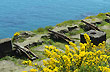
The fort called El Castillo de Niebla is situated on a strategic point facing the sea. It has left its imprint on Valdivia during the events that took place in the 17th century, when it was part of the city´s defense system, which today functions as the Niebla Castle Site Museum. Inside the museum, several objects on display in glass cabinets, including documents, flags, and apparel, give evidence of the pirates’ ambition. Outside, walls built with a stone of volcanic origin known as cancagua and cannons cast in Spain are the silent representatives of this historical past.

We continued along the coast, which led us to the beaches of Los Molinos, San Ignacio, Calfuco, and Curiñanco, now also appreciated for their protected areas and trekking trails, while the sea roared with force and its waves crashed onto the shore. We could not take our eyes off the vast scene before us.
As we went back to downtown, we stopped to taste the delicious Kunstmann beer at its brewery. We were given a lecture in which we understood that the presence of the water and the fact that the rivers are navigable provide this city with an exceptional charm. And we made a toast, feeling grateful to have visited this place.
Contact
Patagonia Adventure Center
Tel: +56 63-2282154

 See also:
 © 2007-2026 Total or partial reproduction forbidden. Derechos de Autor 675243 Ley 11723