A European atmosphere in its streets and buildings envelopes
Puyuhuapi and grants unusual features. Nestled in a zone of incredible beauty, the rooted traditions of this population are reflected in the activities and lifestyle of its dwellers.
It lies 400 kilometers away from
Puerto Montt and 222 from
Coyhaique, joint by the Southern Road, made of gravel. Its climate is temperate and humid.
It is part of the Palena-Queulat Basin, a territory yet unexplored that combines very green forests and very pure waters.
The streets of Puyuhuapi rest on one arm of the sea. Several hills with thick vegetation lie behind the city. This is essentially a fishermen village. Colorful boats moored on the fjord coast give evidence of that.
Craft fishing represents the main source of income in this town. The fishermen get deep into the high sea for several days and manage to catch hake, manta ray and conger. There is a parallel industry, namely riverside carpentry. Even today, wooden watercrafts are built and repaired using this method.
Queulat National Park, with its well designed trails and
the majestic Hanging Snowdrifts, is one of the main local attractions and lies a few kilometers away. All the interesting destinations lie quite close. Whether to the South or to the North, visitors must travel only 30 kilometers to reach them.
Warm strongly mineralized water spring in the surroundings. Enjoying thermal baths at top-of-the-line facilities is a must. Tourist operators also offer horseback rides, hiking tours and organized boat outings. Sport fishing is a strong attraction due to the good pieces caught in the rivers and lakes of this region.
Its streets unveil the original houses that still stand.
Walking about them is one of the essential outings in this town with its own history. Its citizens are the best spokesmen of Puyuhuapi and they always provide information about the origins of this town.
There are plenty of accommodation facilities and camping sites both in the urban shell and in the outskirts. Lodging options range from simple boarding houses hosted by their owners to cabins and apartments with all the comfort and services offered by first class hotels.
Puyuhuapi is endowed with a placid environment for lovers of life outdoors, away from the hustle and bustle and unique natural charms.
“Huapi” stands for island, and “puyu” or “poye” is a flower very common on the fjord islands. A mountain village that has much to offer; visitors just have to find it.

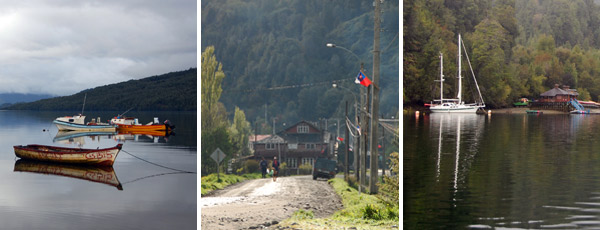 Puyuhuapi - Photo : Eduardo Epifanio