Located in the North of the Aysén Region, the town of
La Junta features a wide range of natural and human resources that give way to a constant commercial and tourist growth. Its present development is the result of the inauguration of the central segment of the Southern Road in 1983.
This road joins La Junta with the City of
Puerto Montt, lying 356 kilometers towards the North, and with
Coyhaique, 266 kilometers to the South. It is the most active in the basin due to its good fields and for having diversified its activities from cattle farming. Its commercial strategy consists in supplying all kind of goods to the rest of the region.
It is part of the Palena-Queulat Basin, a territory yet unexplored that combines very green forests and very pure waters.
La Junta is nestled in the joint of two valleys and of the Rosselot and Palena Rivers. Its excellent climate makes it possible to practice multiple activities while enjoying its ever green nature within a matchless frame of quietness.
Charming rivers and lakes are the epicenter of sport fishing at any season and with any technique: trolling, fly-fishing or spinning. Hiking, horseback riding and agricultural tourism start La Junta towards the four cardinal points.
The tourist services offer increases day after day. It includes a wide range of accommodation options, gastronomical facilities and related operators. The customized assistance and the good disposition towards visitors are typical characteristics of this population.
The district has telephone service, Internet, mobile phone service and FM radio. Likewise, there is a fuel station on the Southern Road. The local aerodrome is open for two-engine aircrafts to land.
The annual calendar includes two long-established festivals: the traditional celebrations late in January and the town anniversary on the second week of February.
La Junta stands out for being an ideal site to rest. There is hardly any nightlife, except for the festivities mentioned above. It is known as “The town of encounters” for its geographic location, but also because it is worth experiencing an encounter with its people, its history and all the uncharted areas it has to offer.

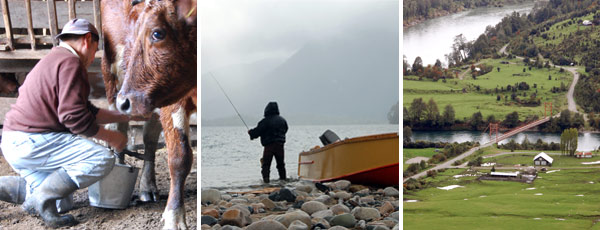 La Junta - Photos : Eduardo Epifanio