Tours and Activities:
Castle of Niebla
The facilities where objects related to past events are on display share the same space where the Spanish forts were originally settled.

Both Corral Bay and Niebla Bay still preserve remnants of the defensive system that once protected Valdivia during the era of the Spanish colony in southern Chile. In Niebla´s area, the old fort was restored and now houses the Castillo de Niebla site Museum, one of the most visited cultural landmarks in southern Chile, offering free admission and welcoming over 160.000 visitors each year.
A tour around its rooms helped us understand a little bit more about the history of Valdivia, a city founded in February 1552. Its location on the road joining the Vice-royalty of Peru and the Strait of Magellan made Valdivia a strategic location regarding wood and gold supply as well as trade in general, with the help of an ample navigable river network that connected this region with the forests, an essential resource for construction. This trait earned it the name of "southern pearl" and it was coveted by other powerful nations in the world.

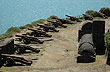
The defensive set was made up of walls, a fort, castles, and cannons, which were never defeated by the enemies wandering around the Pacific Ocean. Five hundred years later, those walls still stand, and they are the access gate to a valuable collection that brings that stage of Chilean history back to life. Documents, weapons, ovens, walls, storehouses, and the houses of the priest and the lord have survived the passing of time at this location at the point known as Santa Cruz.
The new image of the museum includes footbridges and viewpoints. The aim was to preserve the original Cancagua stone used in the construction. Wise, the views lying next to the museum and the bay were enlarged. Historical facts are shown on panels with appealing anecdotes easily understood by all visitors, including children and grown-ups. Archeological objects, period manuscripts, and replicas of soldiers posing as if they were attacking the enemy are appreciated in the venue.

The Historic Monument of frat heritage value is known by its original name: Castillo de la Pura y Limpia Concepcion de Monfort de Lemus. Built between 1645 and 1672 with Cancagua stone, it once housed up to 600 armed men. Together with the forts of Corral, Amargos, and Mancera, it formed an impenetrable defensive system that remained active until Chile´s independence in 1818.
Today, these colonial remnants offer a unique cultural and historical attraction, where history blends with the landscape to give visitors an unforgettable experience along the Valdivia coast.

Contact
Patagonia Adventure Center
Tel: +56 63-2282154

 See also:
 © 2007-2026 Total or partial reproduction forbidden. Derechos de Autor 675243 Ley 11723