Tours and Activities:
Mapuche Museum in Pucón
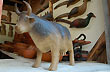
The objects on display hold strong artistic value and, through their symbolism, offer insight into the worldview that Indigenous peoples have shaped over time.

The Mapuche Museum of Pucón opened its doors approximately a decade ago as the result of a private initiative dedicated to the preservation, safeguarding, and dissemination of the cultural heritage of the Indigenous peoples of southern Chile.
Over the course of a century, the Ulloa-Metzger family gathered around 1,500 pieces, rescuing artifacts and stories connected to lithic art and traditional silverwork, which are now exhibited throughout the museum’s galleries. We were welcomed by Gonzalo Ulloa, who, together with his son Rodrigo, guides visitors with clear and highly engaging explanations. Both possess deep knowledge of the histories of the communities settled in southern Chile and the migrations they undertook in search of sustenance and harmony with nature.

As we observed the various display cases, it became evident that the family had undertaken remarkable work to recover this ancestral wealth, protect cultural heritage, and share it with visitors.
The museum houses a valuable collection of pre-Columbian stone artifacts, considered one of the most complete in the country. Alongside these are nearly one hundred ritual masks, pipes used for both social and ceremonial purposes, some associated with spiritual practices connected to the sacred, and a large number of small, colorful beads crafted from natural pebbles for personal adornment. Other, larger pieces bear engravings of moons and suns; many were used as everyday tools.

We were particularly struck by the delicate silverwork. Gonzalo explained that these pieces belong to a more recent period, no more than 250 years old, and were crafted from silver coins obtained by Indigenous communities through livestock trade. The collection includes pectorals, ceremonial masks, and a wide variety of necklaces and earrings that formed part of women’s attire and cultural identity.
In the Araucanía region, the Mapuche people left a profound mark that today allows visitors to better understand their way of life, worldview, spiritual thought, and shamanic art. During our visit, the respect and sense of identity conveyed by the guides left a lasting impression, bringing us authentically closer to the cultural richness of the region’s Indigenous heritage.

Contact
Museo Mapuche de Pucón
Tel: +56 45-2441963

 See also:
 © 2007-2026 Total or partial reproduction forbidden. Derechos de Autor 675243 Ley 11723