The Province of Concepción was created in August 30, 1826 and is made up by the Districts of Talcahuano, Penco, Tomé, Florida, Hualqui, Santa Juana,
Lota, Coronel, San Pedro de la Paz, Chiguayante, Hualpén and the modern City of
Concepción, after which it is named.
The City of Concepción is the entrance gate to Southern Chile and the capital of the Bío-Bío Region. Having a population of almost 370 thousand inhabitants, this city is constituted as one of the most important centers of financial, commercial and tourist services in the country.
It is surrounded by Mount Caracol, the Andalién and
Bío Bío Rivers and the Pacific Ocean. It is joined to the rest of the territory by air, land and railway connections. Southern Route 5, the Itata Road, from the North, and the Madera Road, in the South, are the most direct accesses to this city.
City of universities, there are several centers of superior studies in Concepción which position it as one of the most important cultural centers in all Chile.
It is also the venue for many congresses and seminars, outstanding art galleries, national and international artistic displays, museums, theaters and cinemas which contribute with their cultural value.
A
city tour shows visitors around the most representative museums, among which the sacred art museum and the history museum stand out. Another attraction is the local market,
Plaza de la Independencia (Independence Square), Ecuador Park and the picturesque
Plaza España (Spain Square). But the big attraction of the city is Mount Caracol, which provides a magnificent panoramic view of the city and its outskirts.
To the North of the city, visitors may access charming bathing resorts and interesting cities by the sea, from
Talcahuano and Penco to the surroundings of the Itata River.
The road leading to the South reaches the District of Arauco, after passing by the quiet tourist village of
Lota, which has attracted many visitors from unusual places in the last few years.
Its main attractions include museums and parks, the local harbor, sea food restaurants and the famous coal mine called
Chiflón del Diablo that gets thousands of meters under the Pacific Ocean and lets visitors become real miners for a few moments.

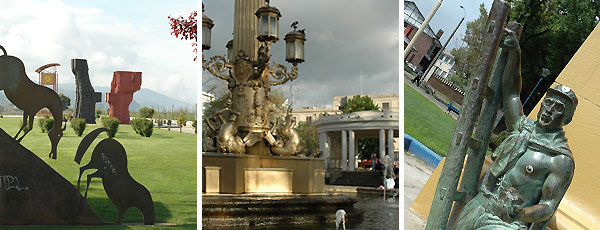 Concepción - Photos: Jorge González