The small
Calama is the world capital of copper, which continues to be "Chile’s bread", as wisely defined by President Salvador Allende. This picturesque city, called "bedroom city" by many, has perfectly accompanied the growth of the mining industry in the late XXth century.
Mining populations such as
Chuquicamata were the perfect excuse for the city to have a population of nearly 150 thousand inhabitants, who find there all kinds of services and shops to satisfy their basic needs. Situated 213 kilometers to the Northeast of
Antofagasta and almost 100 kilometers from
San Pedro de Atacama, due to its geographic location, Calama is the perfect center between the pre-Andean desert and the Pacific Ocean, the last link in the copper industry.
A tour around the city shows its quiet streets and its plain historical buildings, as well as its small main square, called "23 de Marzo", which shelters the cathedral San Juan Bautista, refurbished years ago. The Ramírez pedestrian promenade, with its Monument to the Miner, is one of the most popular for both tourists and locals during the day, as the city’s commercial life is concentrated there.
To the South, lies El Loa Park, so called after the river bearing the same name, which is the longest in Chile and provides Calama with the necessary water for the desert to turn into a real oasis.
But, undoubtedly, the most important tourist attraction in the city, which summons visitors from all round the world, is its mining history. A few kilometers away from Calama stands the largest open pit mind in the world: Chuquicamata. The tour starts at the small village of Cuchicamata (soon, definitely moved to Calama) where a historical museum takes visitors on a journey across time to the times of the first miners. The excursion continues in the mine, to observe its large size and the daily work of thousands of people at first sight. A real wonder whose vast dimensions help us understand the millionaire numbers and, especially, the sacrifice thousands of men have made in order to turn this booming industry into the largest in Chile.

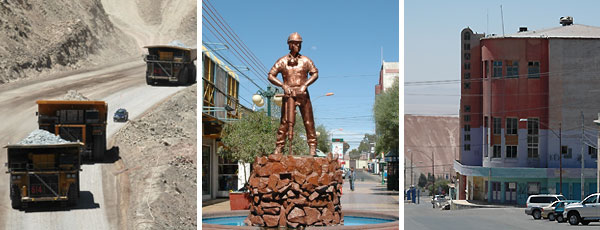 Calama -Photos: Jorge González