Tours and Activities:
In the Background, the Saltpeter
Pablo Etchevers Pablo Etchevers (1) Jorge González (2)The Iquique Regional Museum shelters several unimagined worlds. With the salt, the primitive peoples, anthropology and archeology, anything is possible inside this venue.

A limited entrance lets visitors into one of the most beautiful museums in Chile as far as architecture and culture are concerned. Hundreds of children visit this venue everyday in the company of their teachers and tourists from all over the world are surprised by what they can find there.
Two Inca Mummies
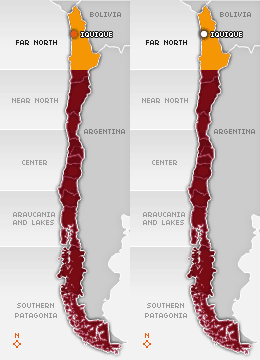
Baquedano is undoubtedly the most beautiful street in the City of Iquique. At 900, stands the Anker Nielsen Regional Museum, a building housing various treasures from Northern Chiole. Visitors only need to open the door and get into the glorious past of the region and its vast surroundings almost as if by magic.
To the left, a spacious light room displays the influence of the Aymará culture, appreciated in the diverse corners of the museum, not only in the pots and ceramic works but also in the reconstruction of its dwellers in life size, rich in clothes and silver jewels.

The anthropological and archeological relics are the most attractive items among which two mummies from the Chinchorro culture stand out, as well as the tools used by the peoples that dwelled the area for years.
After much research, it was learnt that the mummies were an Inca princess and her lady in waiting, both of them found on Mount Esmeralda, wearing their clothes and silver jewels.
Salt, Much Salt
There is no doubt that this is the most interesting part of the museum. A group of large dark connected rooms leads visitors into a unique tour that should never end: the history of saltpeter in Northern Chile.

Costumes from those days, with period helmets, pickaxes and shovels, as well as a countless number of coins, show the various stages in saltpeter exploitation.
Hundreds of saltpeter works are reflected on the museum walls. One of them is Don Guillermo’s camp, where the largest amount of salt was extracted to be processed in the Santa Laura, Humberstone, Iris, Huara, Pozo Almonte and Piragua facilities.

Many illustrations, scale-models and signs guide visitors and give them information about each item in the museum: old scales, shoes, shirts, hats, canteens, vests and watches. For these men, salt was the source of life as much as it was a way of communication with its own codes and logic. All this had to be replaced by fishing and mining when saltpeter ran out.

Contact
Sernatur

 See also:
 © 2007-2025 Total or partial reproduction forbidden. Derechos de Autor 675243 Ley 11723